
01
Sensors & Probes
Pitot and static ports are masked, never sprayed or probed. Angle-of-attack vanes, TAT probes, and antennas are never forced, lubricated, or used as handholds.
Aviation Preservation
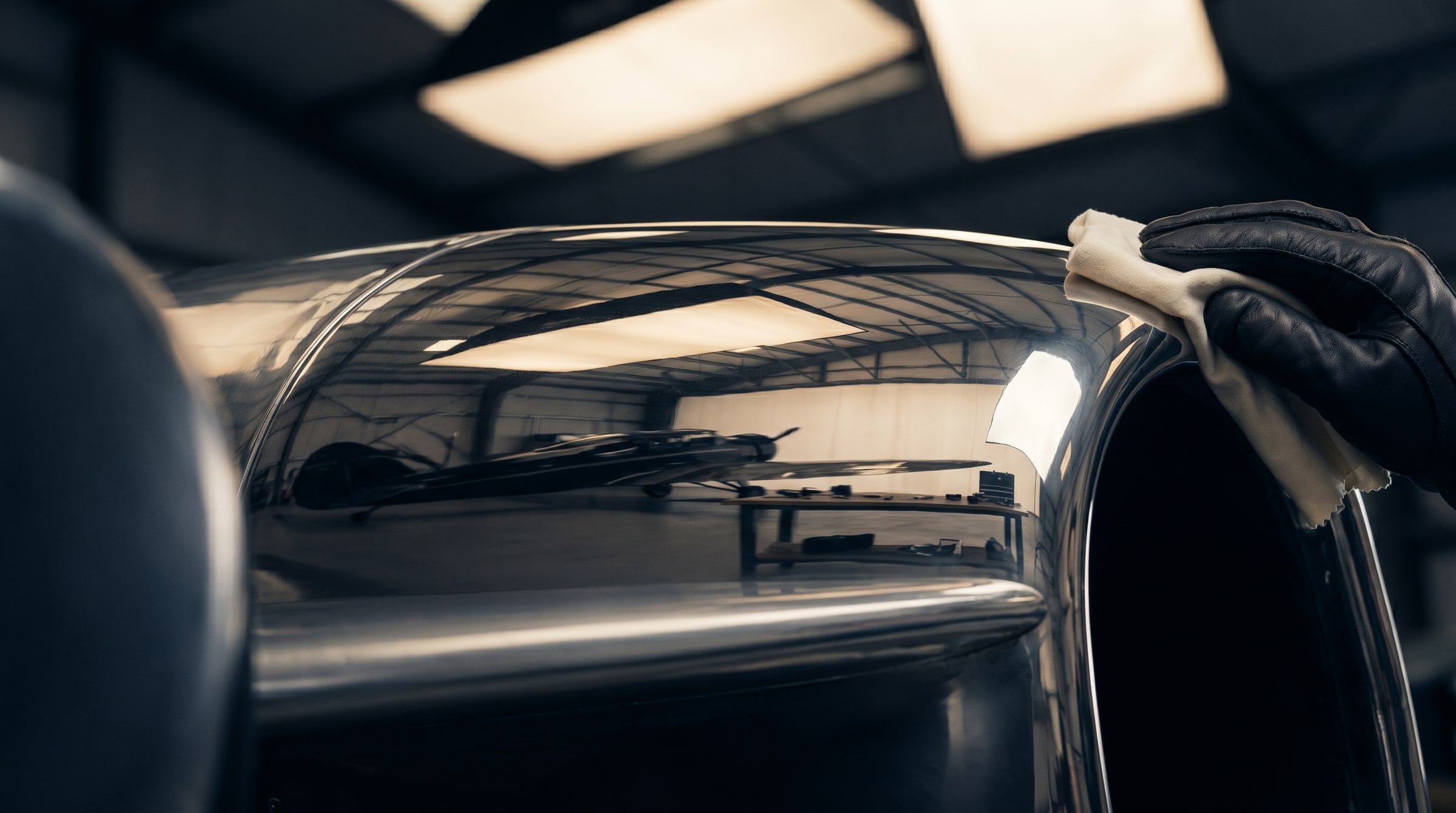
Aircraft brightwork polishing and metal mirror finishing.
Metal preservation and mirror finishing.
Metal preservation and mirror finishing for leading edges, spinners, engine inlets, and polished accents.
Time on aircraft2–6 hrs (labour-heavy)
Brilliant reflective metal surfaces maintained to the highest aviation presentation standards.
Some areas on an aircraft or vessel do not forgive guesswork. A finish can be restored — a damaged sensor, a compromised windscreen, or a degraded de-ice boot cannot.
Before any cleaning begins, sensitive systems are identified and protected. These are non-negotiable protocols on every aircraft and vessel we service.
Pitot and static ports are masked, never sprayed or probed. Angle-of-attack vanes, TAT probes, and antennas are never forced, lubricated, or used as handholds.
Radomes receive no harsh solvents or abrasives. Lightning diverter strips remain untouched. The anti-glare panel is never polished, waxed, or solvent-wiped — it is matte by design.
Acrylic windscreens and Mylar-coated cabin windows see no ammonia, no dry wiping, and no pressure. They are flooded and wiped in a single direction using clean media.
Inlets, exhausts, and fuel vents are protected from water and chemical ingress. Oxygen service areas remain completely free of grease and petroleum products.
Landing gear and wheel wells are degreased with full respect for seals, brake assemblies, and tire compounds. High-pressure water is never used near seams, seals, ports, bearings, or electrical bonding points.
On the water, the same discipline applies.
These protocols exist so flight departments and yacht owners never have to choose between a clean aircraft and a dispatchable one.
Build your custom service package and schedule your service today.