
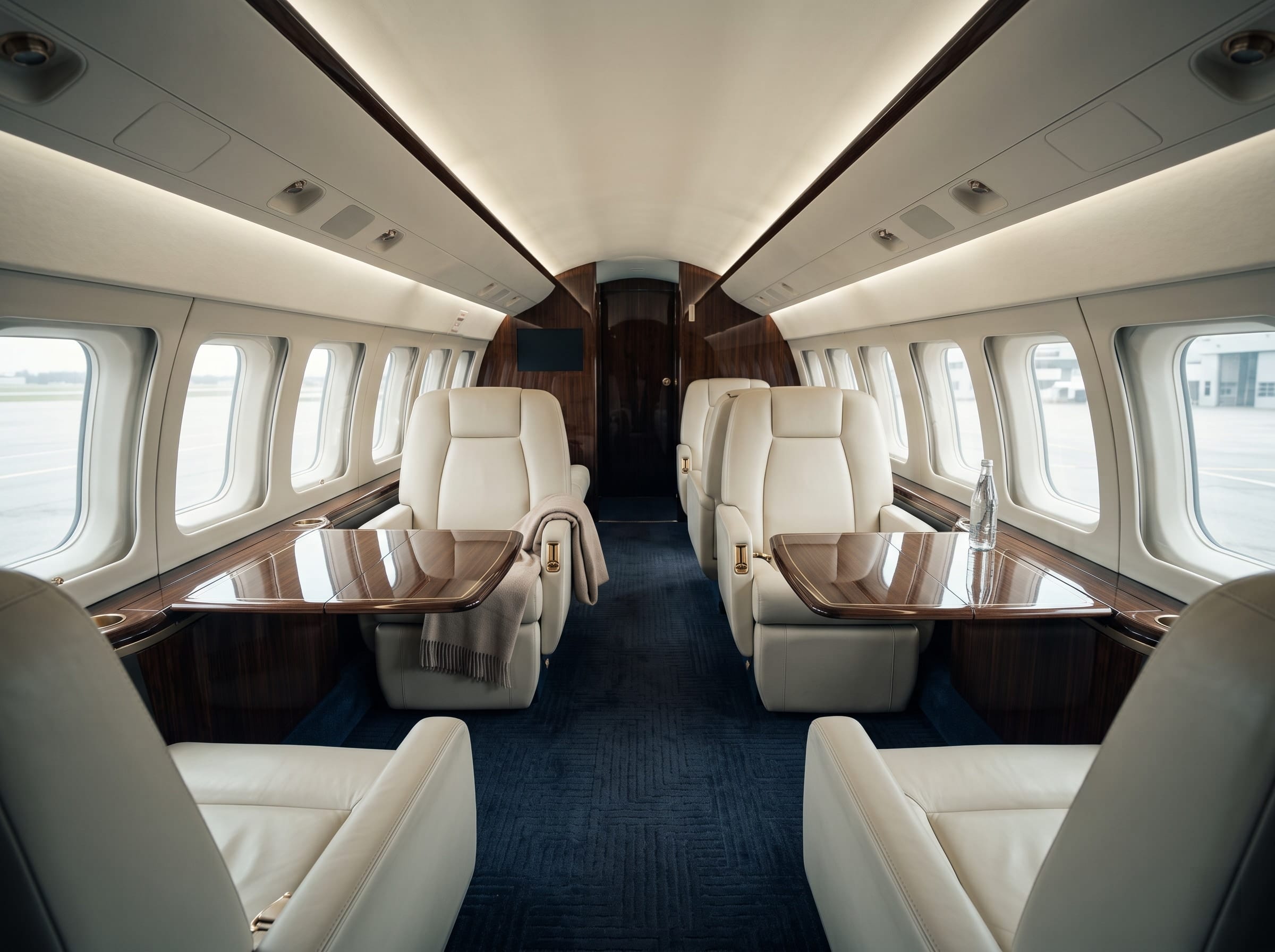
A healthy cabin,fully documented.
Aircraft disinfection and disinsection — performed with the same discipline, material care, and documentation standard applied across every Monarch service.
ICAO Annex 9 · WHO-compliant · By consultation
Often confused —deliberately distinct.
A cabin that looks immaculate should also be a healthy one. Monarch provides both services — carried out precisely and recorded fully.
Pathogens & cabin hygiene
Material-safe treatment of the high-contact, high-occupancy surfaces passengers and crew share on every journey.
Insect-control compliance
An insect-control treatment mandated by some countries for biosecurity before an aircraft may enter — performed to recognized international standards, fully documented.
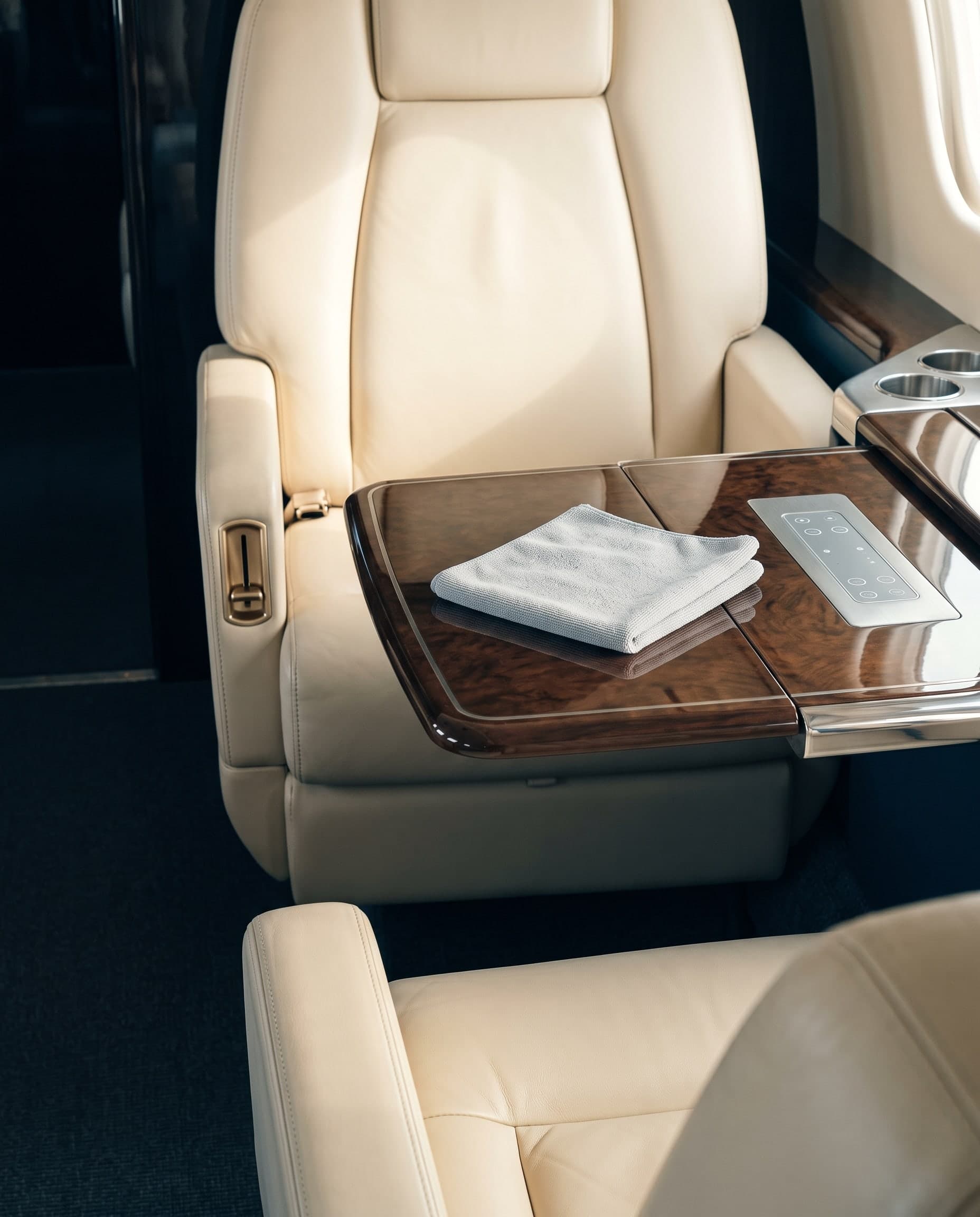
The surfacesthat matter most.
Material-compatible products and controlled application methods are used throughout — chosen to protect leather, plastics, electronics, and finishes, never to compromise them.
- Seats and armrests
- Tray tables
- Interior panels and sidewalls
- Cabin controls and touchpoints
- Galleys and service areas
- Lavatories
- Crew workspaces
- Cockpit touch surfaces
Suited to
- Private aircraft
- Corporate flight departments
- Charter operators
- Flight schools
- Air ambulance operators
- Aircraft returning from extended travel
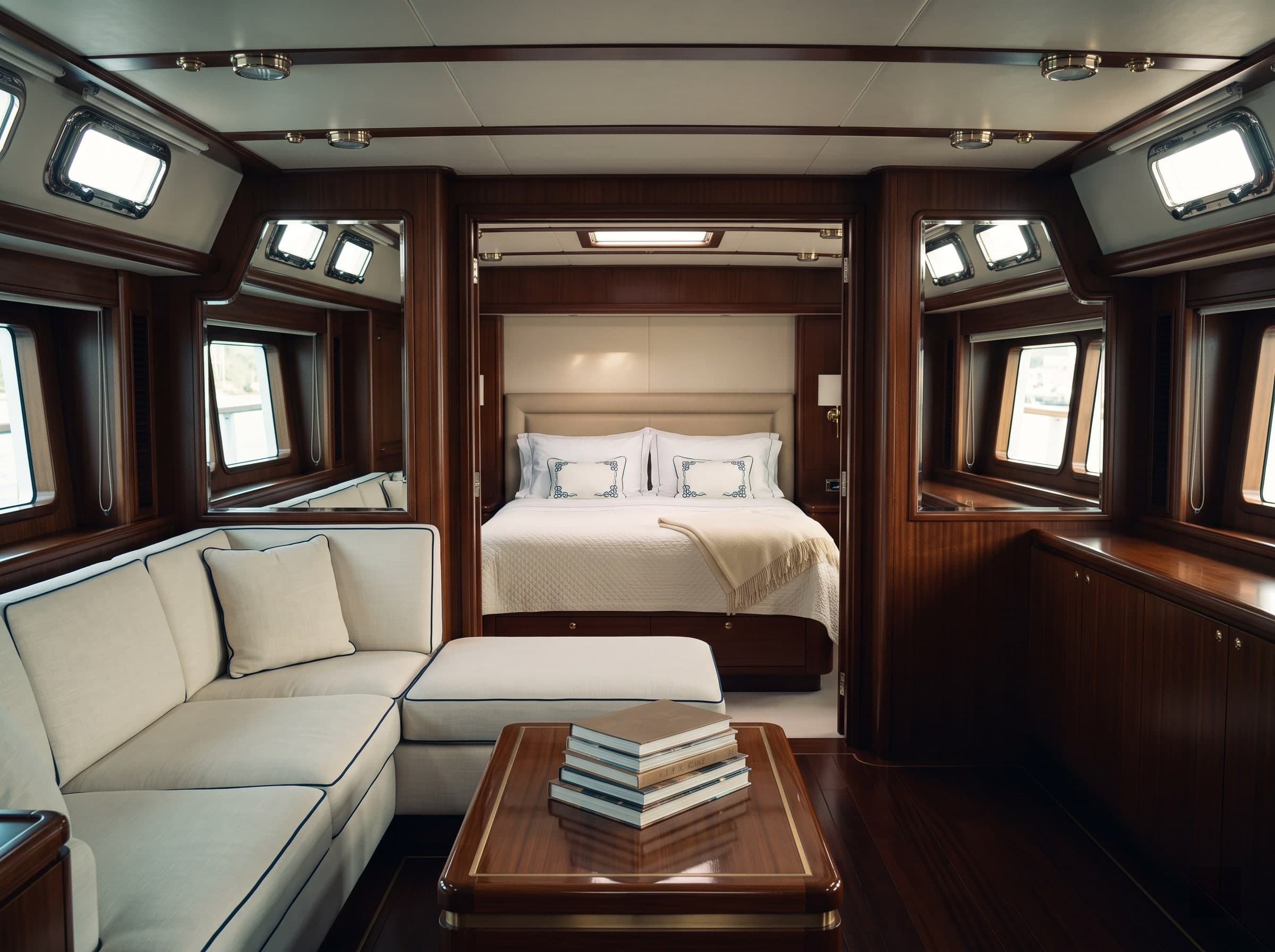
Marine interiordisinfection.
The same controlled approach is available for enclosed vessel interiors — addressing mould, mildew, odour-causing contamination, and seasonal occupancy concerns, while preserving the appearance and integrity of interior finishes.
- Cabins and staterooms
- Heads and washrooms
- Galleys
- High-touch surfaces
- Soft furnishings
- Enclosed living spaces
Not optionalwhere mandated.
Certain countries require aircraft arriving from international destinations to undergo insect-control treatment under local health and biosecurity regulations — following ICAO Annex 9 and WHO guidance. Without valid treatment and documentation, an aircraft can face delayed clearance, on-arrival treatment at the operator’s expense, or refused entry.
Monarch performs WHO-method treatment and provides the documentation operators present on arrival — a disinsection entry on the General Declaration and, for residual treatments, a WHO Appendix 4 residual certificate valid for eight weeks. International acceptance is route-specific, so we confirm the exact requirement for your destination before you fly.
Pre-flight treatment
Applied before departure where the route requires it.
Residual treatment
A longer-acting application effective for the destination's window.
International-compliance treatment
To the recognized standard for the entry requirement.
Documentation may include
- Date and time of treatment
- Aircraft registration
- Product and application details
- Disinsection entry on the General Declaration
- WHO Appendix 4 residual certificate (eight-week validity)
- Certificate of treatment
A note on documentation
Several international authorities — particularly across the EU, the Pacific Islands, and the Caribbean — will not accept digital or photocopied certificates. Monarch issues a physically signed and company-stamped Certificate of Disinsection that travels with the aircraft and is presented to authorities on arrival — the original that passes inspection.
Countries that mayrequire disinsection.
Oceania & Pacific
Australia · New Zealand · Fiji
Caribbean
Barbados · Jamaica · Trinidad & Tobago · Grenada
Africa & Indian Ocean
Seychelles · Tanzania · Madagascar
South Asia
India
South America
Chile · Guyana
This list is not exhaustive. International requirements vary by route, aircraft origin, and season, and may change without notice. Operators remain responsible for verifying current entry requirements with their flight-operations team before departure.
Measured. Brief.Fully recorded.
Assessment
The cabin is inspected — materials, finishes, and ventilation noted. Sensitive surfaces and electronics are protected before any treatment begins.
Treatment
WHO-compliant treatment is applied by a controlled, measured method — even, deliberate, and confined to where it belongs.
Ventilation
The cabin is ventilated per the product's safety data before it is returned to service. Treatment is brief; the full engagement is typically completed within a short window.
Documentation
Records are issued and retained: full treatment details and a signed, stamped Certificate of Disinsection that accompanies the aircraft where the destination requires it.
Cleanliness is visible.Confidence is documented.
Documentation
Every treatment is recorded and retained as part of the aircraft's care history.
Material compatibility
Procedures are designed to respect aircraft interiors and sensitive cabin materials.
Operational flexibility
Available alongside detailing, cabin renewal, and return-to-service prep — one crew, one visit.
Professional standards
Carried out to documented procedures, with attention to compliance and accountability.
Documented. Recorded. Accountable.
Every decontamination, disinfection, and disinsection engagement is recorded, dated, and maintained as part of the aircraft or vessel’s service history.

Schedule disinfectionor disinsection.
Tell us the aircraft or vessel, the route, and your timing. We carry out the work precisely — and document it fully.