Dry Wash vs. Wet Wash — and How Often Your Aircraft Really Needs Detailing
Two practical questions come up constantly from owners and flight departments — and both deserve clearer answers than the industry usually gives.

Monarch Aeromarine Atelier
March 2026 · 4 min read

Two practical questions come up constantly from owners and flight departments: which washing method is right for my aircraft, and how often does it actually need attention? Both deserve clearer answers than the industry usually gives.
Dry wash vs. wet wash
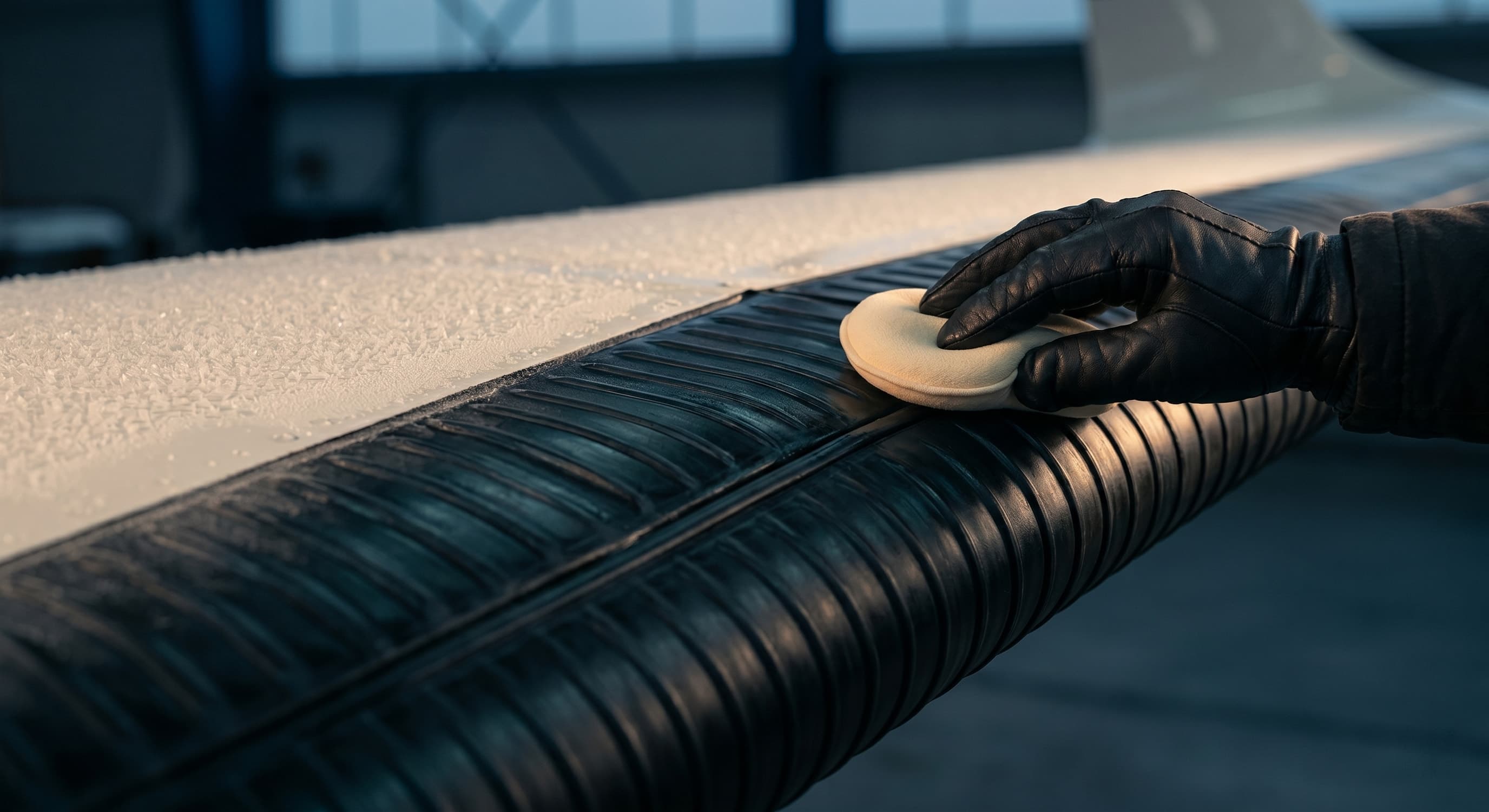
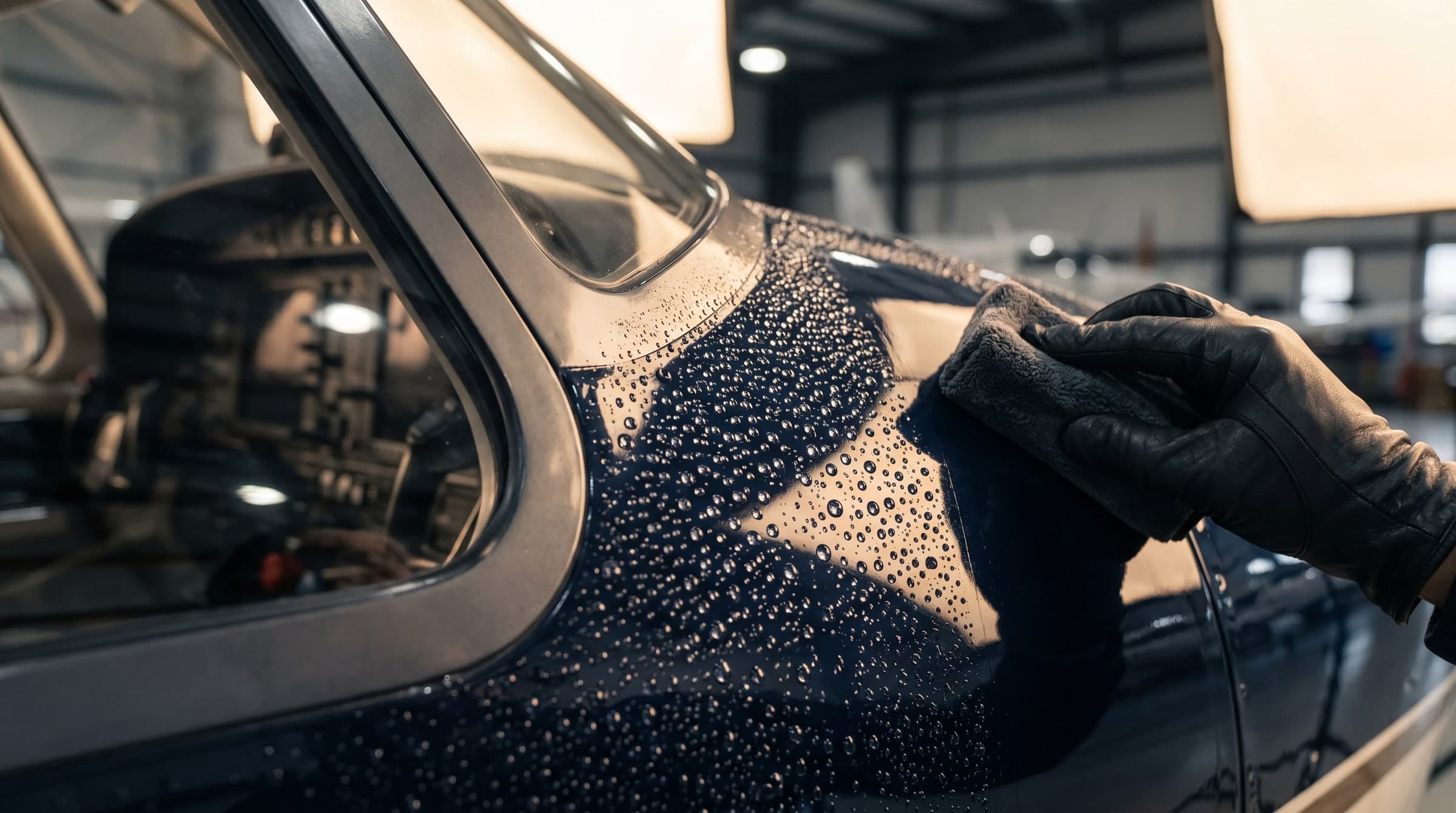
A wet wash uses water and approved cleaners to remove heavy soil, grease, carbon and exhaust deposits — it's the method for an aircraft that's accumulated significant grime or operated in harsh conditions. A dry wash uses specialized waterless products applied and wiped by hand to remove airport film, dust and light soiling while leaving a protective shine. Dry washing has become the most common method at many airports precisely because of water-use and environmental restrictions, and it's gentler for frequent maintenance cleaning. The right choice depends on the contamination level: dry wash for routine upkeep and water-restricted ramps; wet wash when there are heavy deposits a dry method can't safely lift.
Why method matters for preservation
Both methods, done correctly, work from the top down with soft media to avoid scratching, protect sensitive sensors and ports, and use only aviation-approved, non-corrosive products. Done incorrectly — wrong product, abrasive technique, ammonia-based cleaners on windows — washing itself becomes a source of wear. Technique is preservation.
How often?
Cadence should follow exposure, not the calendar alone. An aircraft flown frequently, based outdoors, or operating through Ontario's de-icing winters needs more regular attention than a hangar-kept aircraft flown occasionally. But the underlying principle is corrosion prevention: regular cleaning removes the salt, glycol, exhaust and pollutants that attack paint and invite corrosion, and it's the routine that lets small issues be spotted before they become structural. Detailing is also when a trained eye catches developing problems early — a quiet inspection benefit owners rarely credit.
Protect to clean less
The same logic that governs every Monarch post applies here: a protected exterior sheds contaminants more easily, so each wash is faster and gentler, and the finish endures longer between corrections. Protection and cleaning cadence work together — coat well, and routine care becomes light.
Monarch builds aircraft care programs around how and where you actually operate — method, cadence and protection matched to your aircraft and your ramp. If you'd like care that runs on a considered schedule rather than reacting to grime, let's design one together.
Related Monarch service
Aircraft Care ProgramsSources
Sparklecleaningaircraft · Neatflight