Inside the Cabin: Why Aircraft Leather and Interiors Need More Than Cleaning
The cabin is a uniquely hostile environment for fine materials — and the place where the difference between cleaning and preservation is most visible.

Monarch Aeromarine Atelier
April 2026 · 4 min read
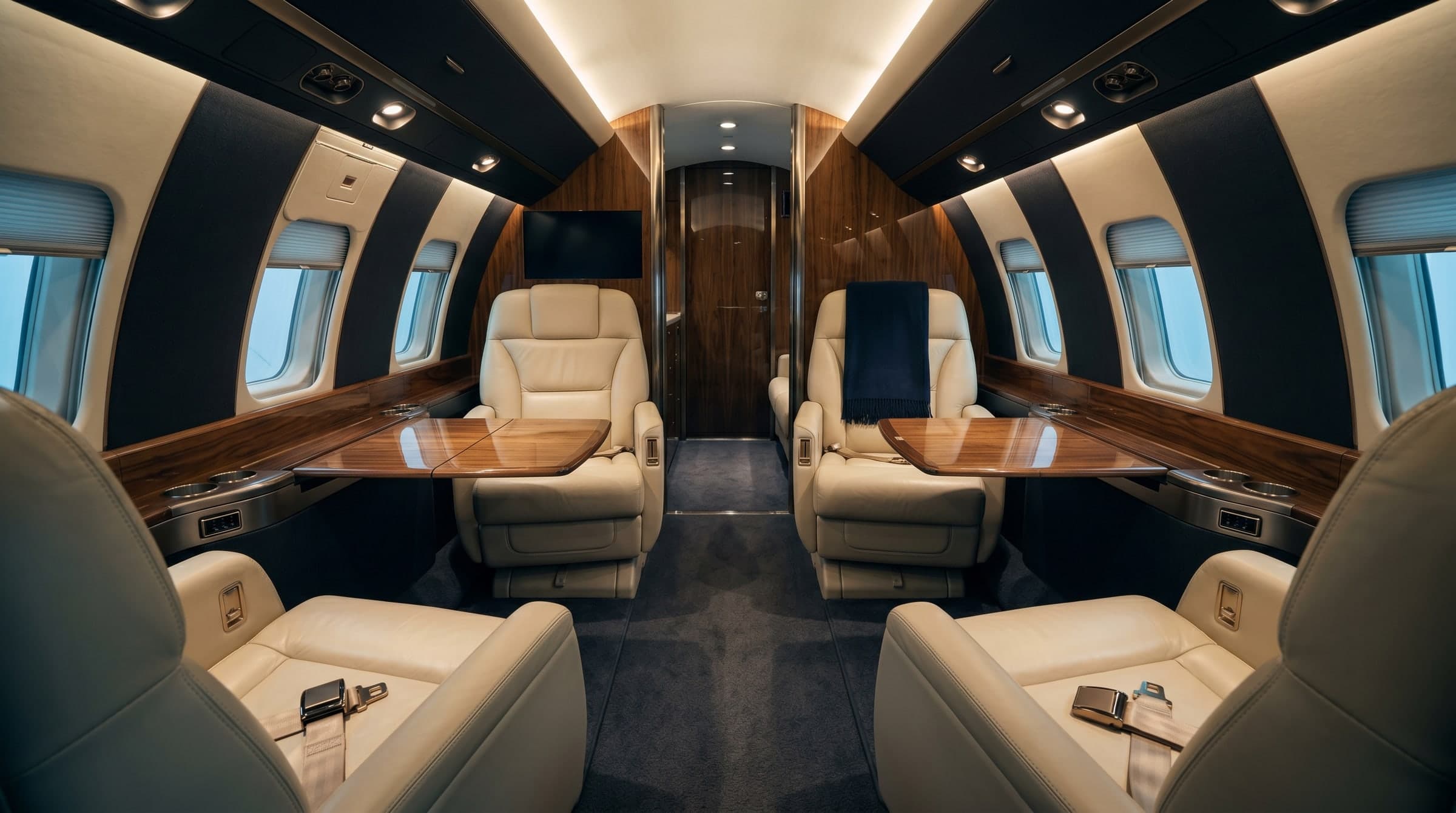
The cabin is where owners, guests and charter clients form their entire impression of an aircraft. It's also a uniquely hostile environment for fine materials — and the place where the difference between cleaning and preservation is most visible.
The cabin is harder on leather than your living room
Aircraft cabins combine intense UV through large windows with extraordinarily dry air. The numbers are stark: NASA data cited by Aviation Business News notes that relative humidity "is less than 1 per cent at typical aircraft cruising altitudes between 35,000ft and 41,000ft," versus the 30–60% of a normal living space — and a Lufthansa Technik study found that raising cabin humidity to even 30% "would double corrosion-related maintenance." That combination of UV and bone-dry air pulls moisture out of leather, and dry leather cracks, stiffens and fades — often within a surprisingly short time if it's only ever wiped down rather than properly conditioned. Conditioning replaces lost moisture and flexibility and adds UV protection, which is why it should be understood as preventative maintenance for the material, not a cosmetic afterthought.
Cleaning removes; conditioning preserves
A wipe-down removes the day's soil. It does nothing to address the slow drying that destroys leather from within. Proper care uses appropriate conditioners applied without over-saturation, restoring moisture balance while preserving the leather's original look and matte finish — no greasy shine, no residue. For high-use cabins, regular conditioning is what keeps seats supple and crack-free over years of service.
It's not just the leather
The same preservation logic extends across the cabin: wood and trim that should be protected against fingerprints and UV rather than just dusted; carpets that benefit from proper extraction rather than surface vacuuming; and the controlled material handling that keeps everything from sidewalls to tray tables looking intentional. Each surface has a correct method, and using the wrong product or technique accelerates wear.
Why this protects asset value
Cabin condition is scrutinized closely in charter and corporate aviation, and it's one of the first things a buyer notices. Cracked, faded leather and tired trim read as neglect and depress value; a supple, well-preserved cabin reads as disciplined ownership and supports it. Replacing or refurbishing a cabin interior is enormously expensive — preservation is a fraction of the cost and protects the larger investment.
Monarch's cabin preservation service treats your interior as the high-value, high-visibility asset it is — conditioning and protecting fine materials so they age slowly and present beautifully. If your cabin should feel as considered as the flight, we'd welcome the conversation.
Related Monarch service
Cabin PreservationSources
Aviation Business News · Lufthansa Technik · Pureaviationdetailing