
Aircraft Ceramic Coating: What Owners and Flight Departments Should Actually Expect
A grounded look at what an aircraft ceramic coating genuinely does — and what it doesn't — for owners and chief pilots weighing the investment.

Monarch Aeromarine Atelier
February 2026 · 4 min read
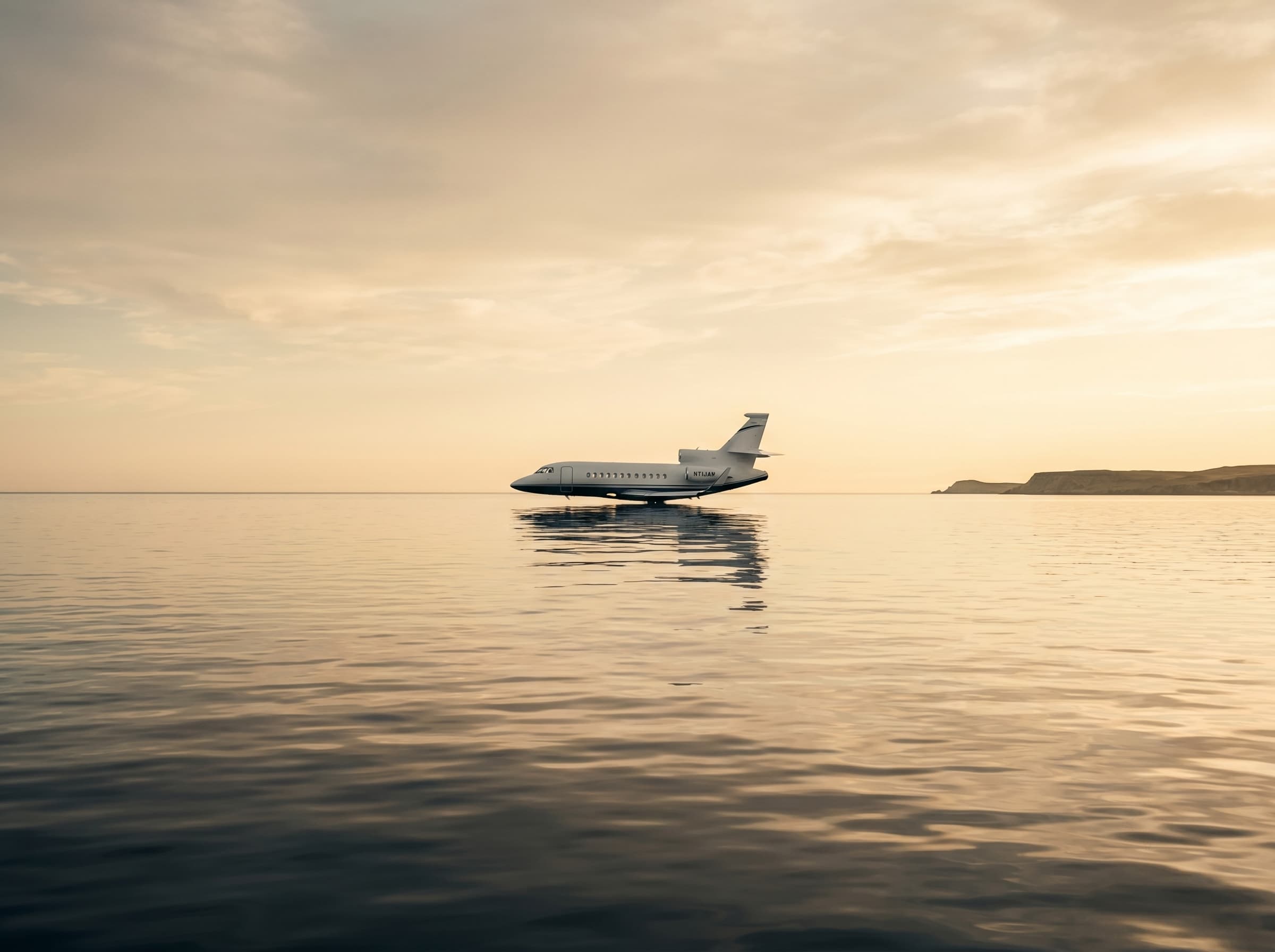
Ceramic coating has moved from the corporate-jet world down into general aviation, and with it has come a fog of marketing claims. For an owner or chief pilot weighing the investment, here's a grounded look at what an aircraft ceramic coating genuinely does — and what it doesn't.
What it is
A ceramic coating is a silicon-dioxide-based liquid polymer that bonds chemically to your aircraft's painted surfaces, forming a thin, hard, hydrophobic layer. Unlike wax — which lasts roughly a year at best between applications — a professionally applied aircraft coating is generally cited as lasting several years, with the strongest “lasts a decade” claims tempered by the realities of leading-edge wear and the intensified UV exposure of altitude.
What it actually delivers
Three benefits hold up consistently. First, UV protection: paint oxidation and fading are driven by sun exposure, which intensifies at altitude, and a coating is the most durable barrier against it short of repainting. Second, ease of cleaning: contaminants, bugs and grime don't bond as aggressively to a slick hydrophobic surface, so washes are faster and gentler — which matters enormously for flight departments managing turn times. Third, paint preservation: a repaint is a serious capital event. C&L Aviation Group quotes a standard repaint at roughly $65,900–$84,500 for a light jet (BeechJet 400) and $87,000–$125,000 for a midsize jet (Hawker 800XP); CNBC reported in January 2023 that painting a commercial airliner runs $175,000–$200,000, per Dean Baldwin Painting. Anything that meaningfully extends paint life protects a large investment.
What to be skeptical of
Drag-reduction and fuel-savings claims exist, and some coatings have undergone wind-tunnel testing, but owners should treat aerodynamic benefits as a bonus, not the reason to coat. And “ceramic” is printed on a lot of products of wildly varying quality — the result depends far more on surface preparation and applicator skill than on the bottle.
Preparation is the whole game
A coating locks in the surface beneath it. Applied over oxidized or defect-laden paint, it preserves the flaws under glass. That's why the sequence is clean, then correct, then protect — never shortcut. The cost of a coating is dominated by prep labour, not product, and that's exactly as it should be.
Is it right for your aircraft?
An aircraft stored outdoors, flown often, or based where winters bring de-icing and salt benefits most. A hangar-kept aircraft gains more in appearance and ease-of-care than in pure protection. Either way, the decision should be made on how and where you operate, not on shine alone.
Monarch's exterior protection program begins with an honest paint assessment and a clear explanation of what coating will — and won't — do for your specific airframe. No hype, just preservation.
Related Monarch service
Aircraft Protective SystemsSources
C&L Aviation Group · CNBC / Dean Baldwin Painting